
Montrose County Arrest Records and Charges
Arrest records are the law-enforcement side of the event. In Montrose County, that can mean sheriff case reports, jail records, booking information, and the public inmate offense list when a person is in custody. The court charge record is different. It begins when allegations are filed in county court, district court, or municipal court and then tracked through hearings, amendments, disposition, and sentence.
The Montrose County inmate list can show booking number, name, name number, statute, offense, court, offense code, and class. It did not show mugshots, date of birth, bond amount, court date, holding location, or release date in the captured research. For the full criminal case file, use the court record request process rather than treating a jail roster entry as a final outcome.
The Montrose County Sheriff's Office records page is the official route for sheriff reports, criminal-justice records, jail records, and 911 recordings.
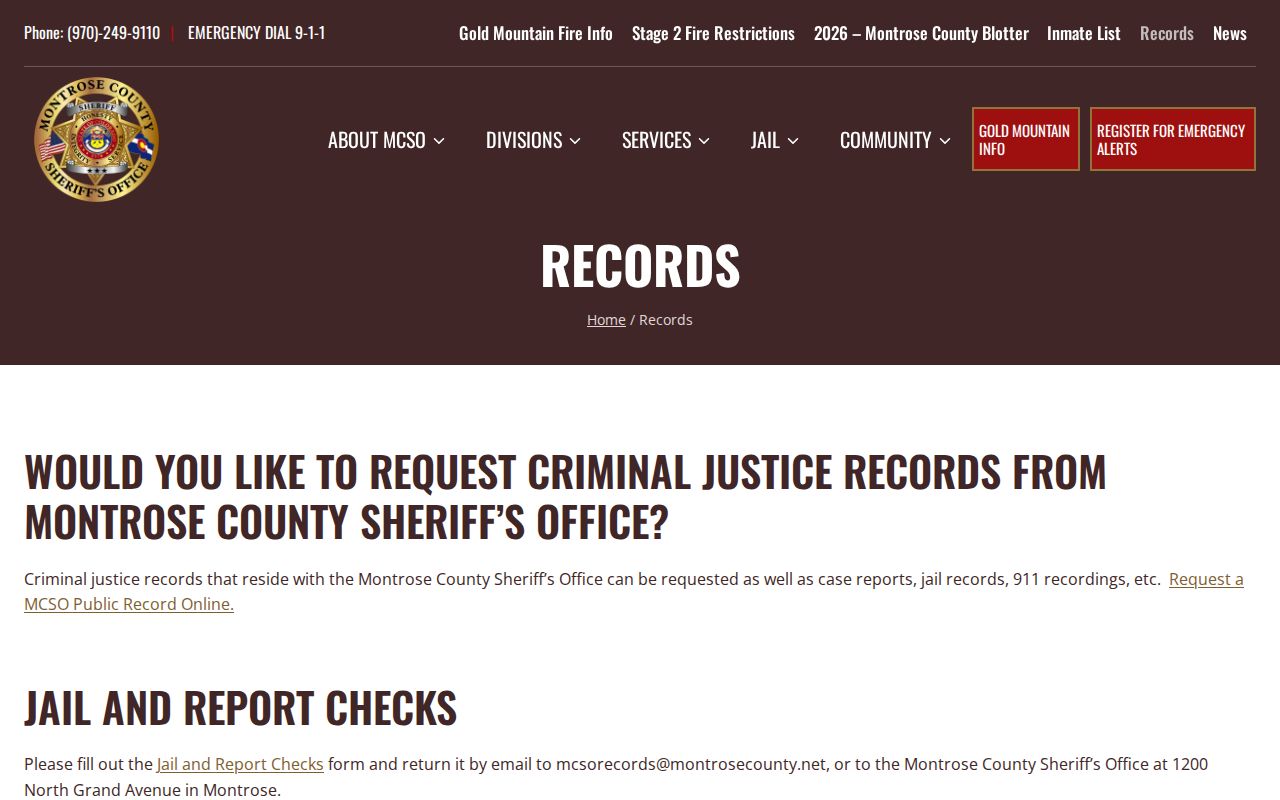
That route covers the arrest side of the record, while court charges are requested through Colorado Judicial Branch or the local court.
Search Montrose Arrest Records
Start with the question being asked. Current custody is checked through the inmate list. A sheriff report or jail record goes through MCSO records. A charging document, disposition, sentence order, ticket, or Register of Action goes through the Colorado Judicial Branch record request form. City ordinance and model traffic code charges inside Montrose city limits may be municipal court matters.
- Check the Montrose County inmate list if the person may be in current county custody.
- Use the sheriff records route for incident reports, jail records, report checks, or 911 recordings.
- Search the Colorado Judicial Branch docket for state court case events and case-number clues.
- Request the complaint, information, ticket, sentence order, or ROA through the court record form.
- Use Montrose Municipal Court for city code, model traffic code, or municipal bench-warrant questions.
The official sheriff directory listing identifies the Sheriff's Office contact route for Montrose County arrest records and law-enforcement records.
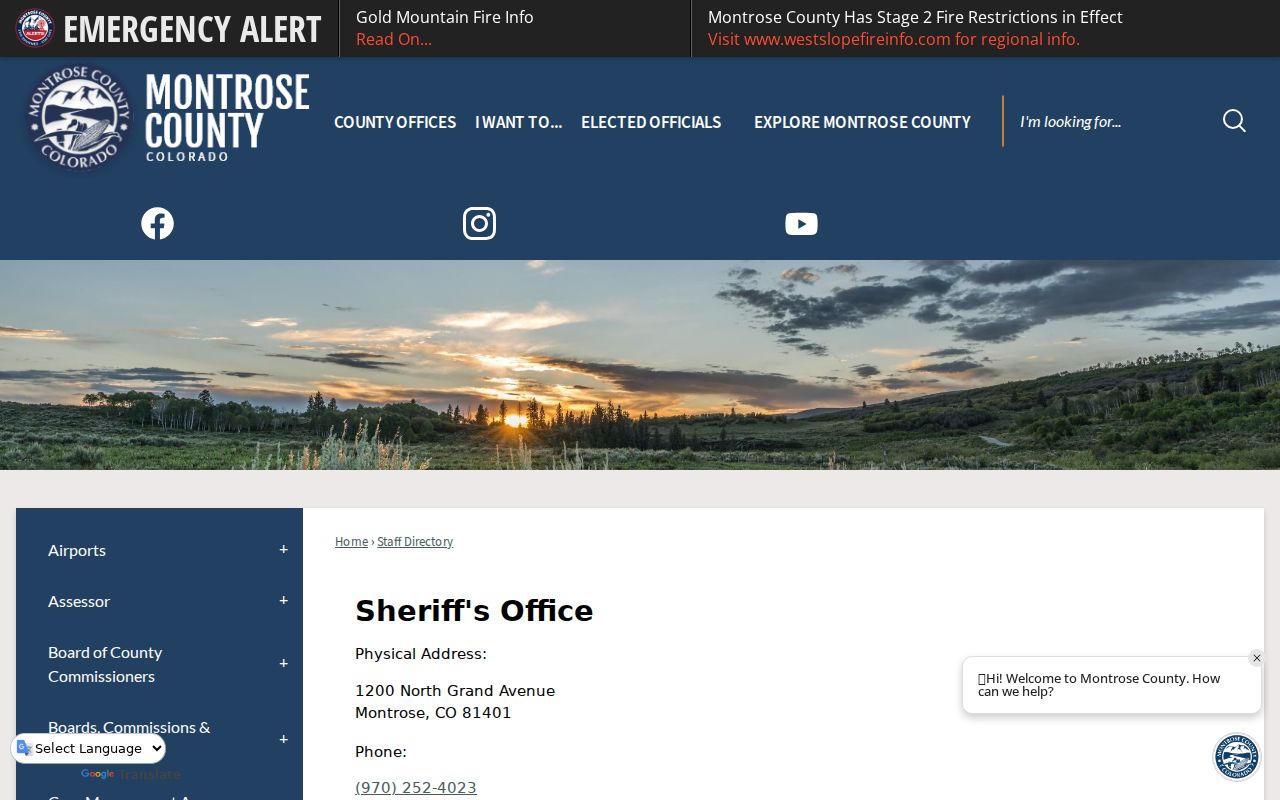
The directory helps verify the agency contact, but it is not a substitute for the court record when formal charges have been filed.
Charges After Arrest
The arrest-to-charge path has several stages. Law enforcement may arrest and book a person. The matter can be referred to the 7th Judicial District Attorney. The prosecutor then decides whether to file charges, decline, divert, defer, amend, reduce, or resolve the case. The DA dashboard is useful because it separates referrals, charging, case resolution, diversion, deferrals, sentencing, victim services, and caseload.
| Document | Who files it | What it means |
|---|---|---|
| Complaint | Prosecutor or law-enforcement route depending on case type | States allegations that start or support a criminal or traffic case. |
| Information | Prosecutor | Formal charging document listed in the court request form's criminal category. |
| Ticket | Officer or issuing agency | Charging document for traffic or some lower-level matters. |
Colorado research did not identify a Montrose-specific grand jury indictment route for routine county lookup copy. Do not assume an indictment exists unless the case record says so.
Montrose Charge Status
A charge can change after it is filed. A prosecutor may amend the charge, reduce severity, add counts, dismiss a count, or resolve it through plea, trial, deferred judgment, diversion, or sentencing. Court records should be read by count and by date because one arrest can produce several charges with different outcomes.
| Status | What it means |
|---|---|
| Pending | The charge is filed or active and no final disposition has been found in the record. |
| Amended or reduced | The prosecutor or court record changed the charge, severity, wording, or count. |
| Dismissed | The charge ended without a conviction on that count, subject to the exact court order. |
| Deferred or diversion | The case may be held open or routed outside ordinary conviction and sentencing if terms are met. |
| Disposition or sentence | The court record shows the result and any punishment, probation, fine, or order. |
Charges Versus Convictions
Being charged is not the same as being convicted. A court charge is an accusation filed in a court case. A conviction requires a guilty plea, verdict, or other final court result that supports conviction. Jail roster offenses and complaint language should be treated as allegations unless the court record shows a final disposition.
| Charge | Conviction | |
|---|---|---|
| Stage | Filed allegation after arrest or citation | Final result after plea, verdict, or qualifying court action |
| Where seen | Jail roster, complaint, information, ticket, ROA | Disposition, sentence order, judgment, ROA |
| Can change | May be amended, reduced, dismissed, or deferred | May be appealed, sealed if eligible, or corrected by court order |
Bond and Release Records
Bond can connect arrest records to court charge records. The sheriff's bond page says the jail accepts cash and surety bonds 24 hours a day, seven days a week, including holidays. Property bonds are not accepted by the jail and must be handled through court. The page also states that a $30 booking fee and $10 bonding fee per bond are assessed to the inmate's account, while the legal notice says bond fees and other debts do not need to be paid to secure release on money bond.
The Montrose County jail bond information explains cash bond, surety bond, online bonding, and the booking desk call requirement.
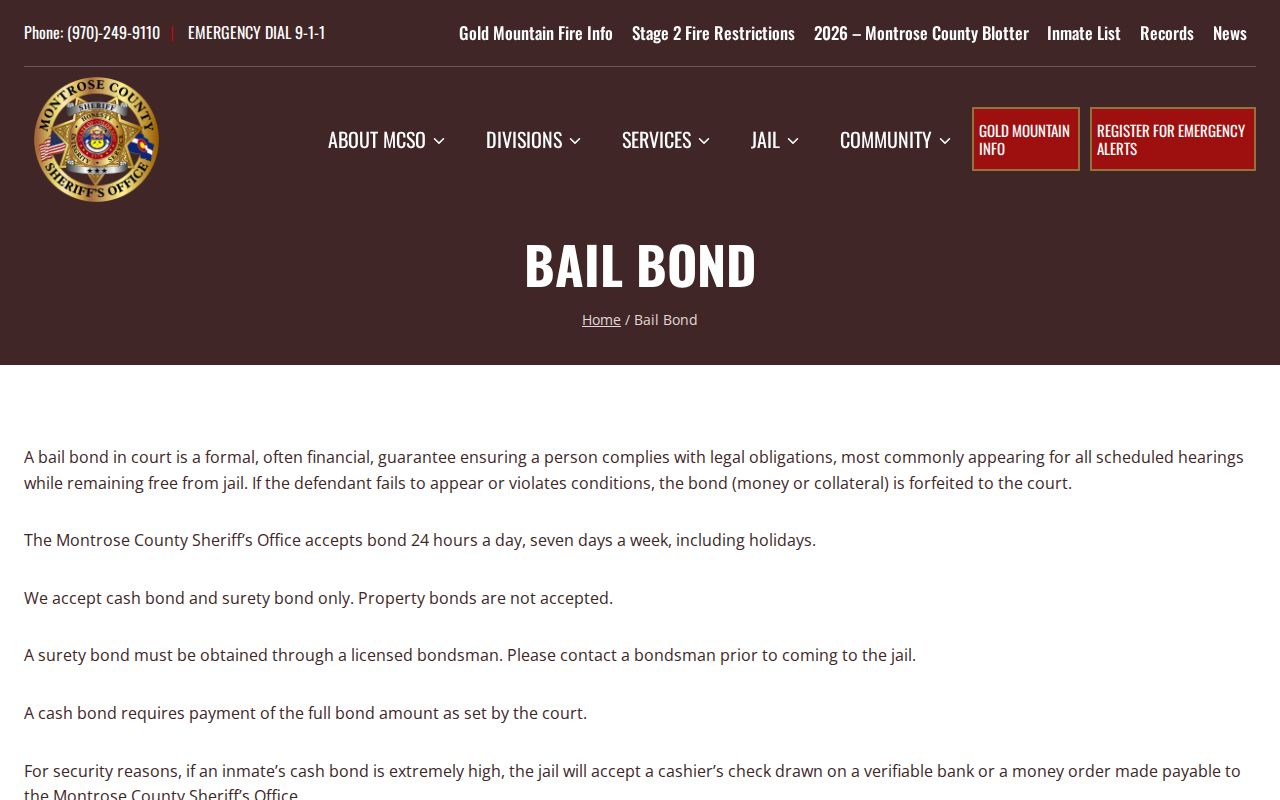
Bond information may change fast, so a public roster should not be used as the final word on bond amount or release conditions.
Sheriff Report Fees
MCSO records fees are separate from court copy fees. Published sheriff fees include $3 for a contact-only criminal background check, $0.25 for a mug shot, $0.25 per page for an offense report, $2.50 for an offense-report search fee, $30 per hour for redaction with a quarter-hour minimum, $30 per hour for address search with a half-hour minimum, $25 for a CD or thumb drive with recordings, and $50 when recordings require redaction.
The Sheriff's Office permits and fees page is the source for those law-enforcement record fees.
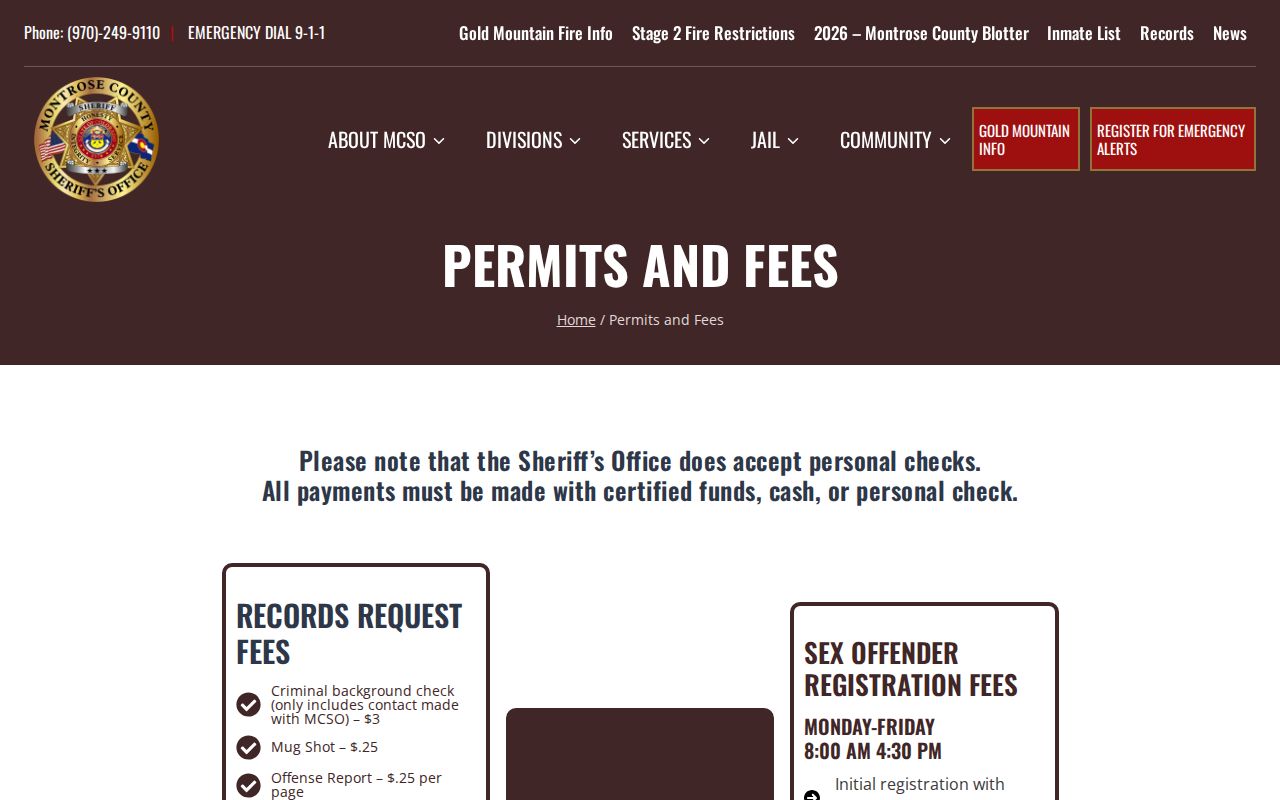
Use these fees for sheriff records, not for certified court records or CBI criminal-history checks.
Failure to Appear and Mittimus
Failure to appear can link a court charge to later custody. The public inmate list sample included Failure to Appear under statute 16-2-110. The sheriff mittimus page explains that a mittimus authorizes confinement after conviction or while a case is resolved and can include the person's name, crime charged or convicted of, place of confinement, and hold instructions.
The MCSO mittimus instructions also describe how a person reporting to detention should use the jail visitation lobby intercom, identify the reason for arrival, be ready to show photo ID, and avoid bringing prohibited items.
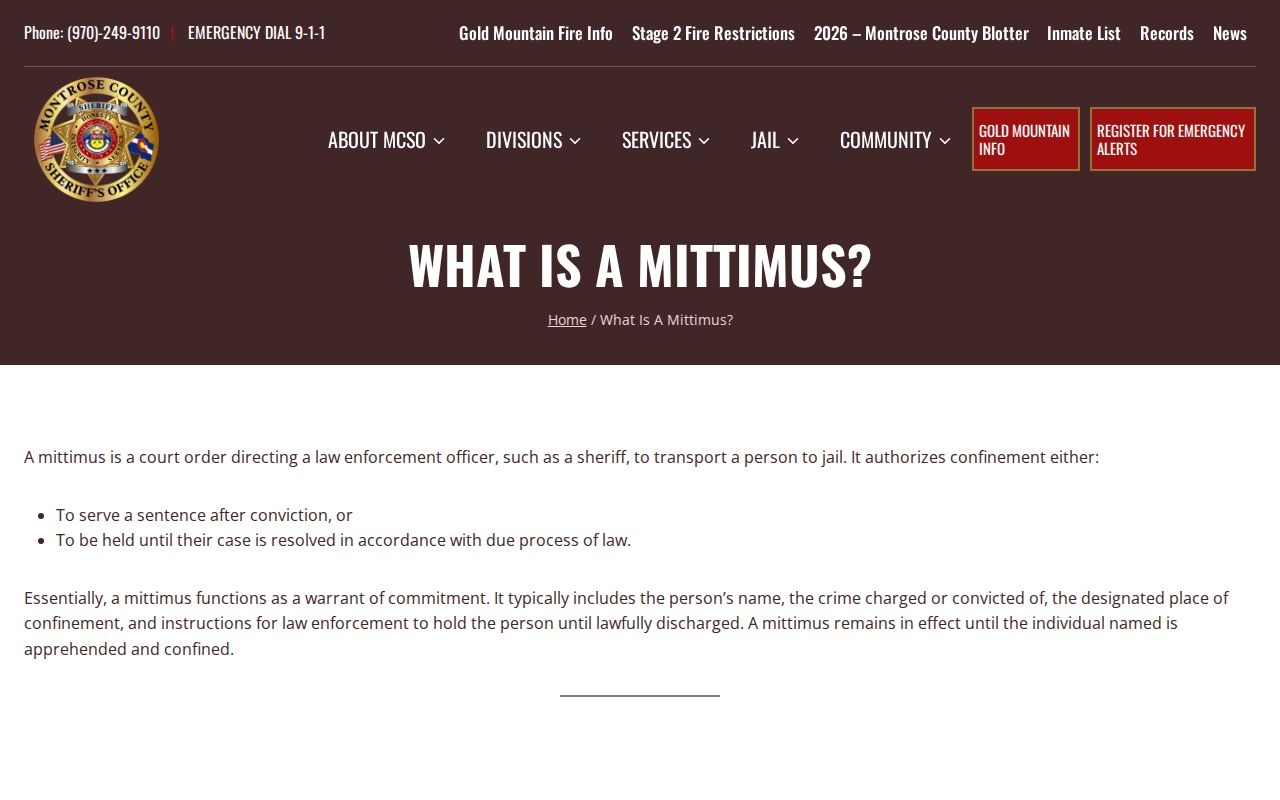
A mittimus is a custody order, not proof that every listed allegation ended in conviction.
Restricted Montrose Charge Records
Juvenile records, sealed cases, suppressed records, adoption records, mental-health files, protected addresses, minor identities, financial account numbers, and confidential information may be unavailable or redacted. The court record request form warns that juvenile and probate records or documents with protected information may require government-issued photo ID. CBI also excludes certain juvenile arrest data from public name-based criminal-history results.
| Sealed | Expunged | |
|---|---|---|
| Public access | Limited by court order or statute | Removed or treated differently under specific law |
| Common use | Eligible adult criminal records and certain case outcomes | More common for juvenile or specific statutory records |
| Still visible to some agencies | Often yes for authorized users | Depends on the statute and order |
Important: This site is not a consumer reporting agency and cannot be used for FCRA-regulated screening.
The Montrose County jail history page gives useful context for the current jail facility and booking area.
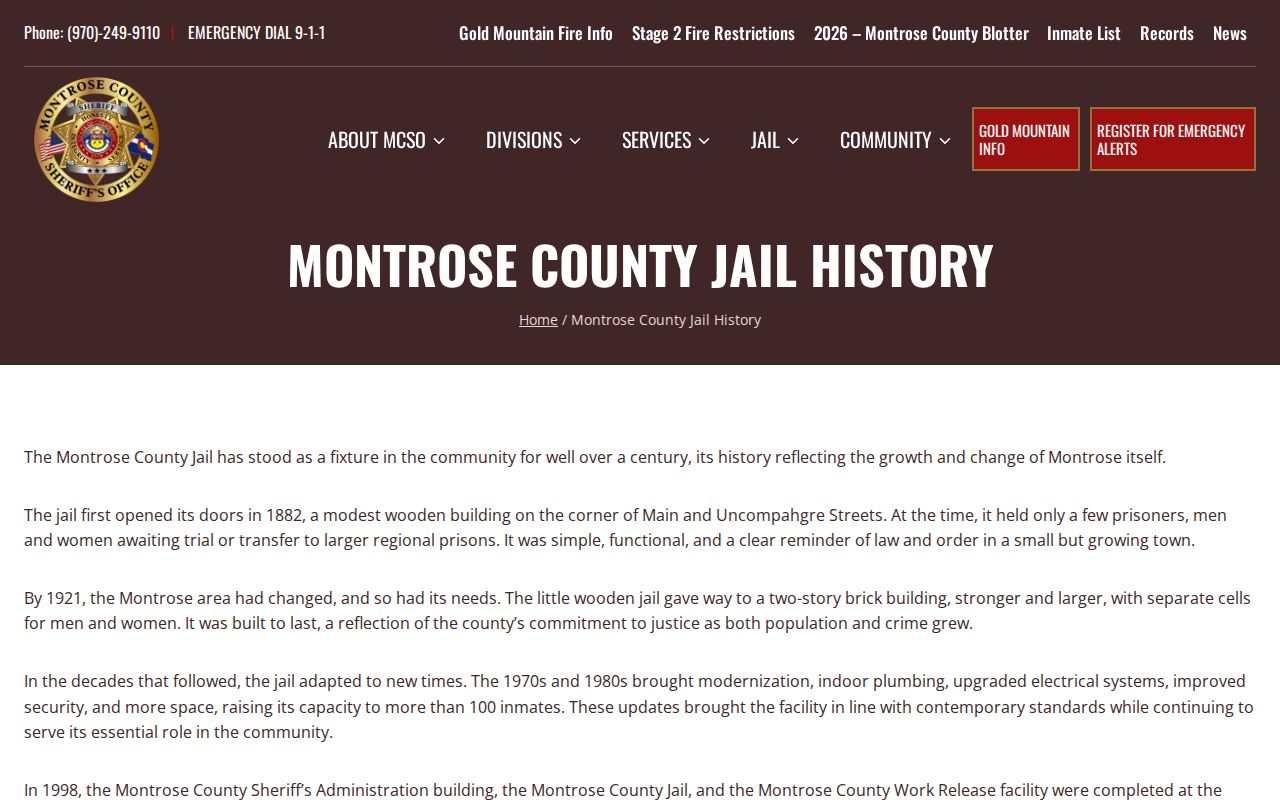
Facility history helps explain where booking and custody records are generated, but the court file remains with the Clerk of Court.