
Montrose Criminal Court Records
A Montrose County criminal court record is the case file held by Colorado Judicial Branch after a criminal matter opens in court. It is distinct from a sheriff arrest report, jail roster entry, or CBI criminal history report. The court file can include the complaint or information, register of action, minute orders, protection orders, ticket, disposition, and sentence order. For a closer look at the charge record itself, see arrest records and court charges.
County Court handles misdemeanors, traffic infractions, and felony complaints that may later be sent to District Court. District Court handles felony criminal matters. Montrose County cases are part of the 7th Judicial District, and state criminal court files are maintained through the Clerk of Court at the Montrose County Justice Center. Municipal ordinance cases inside city limits are handled by Montrose Municipal Court, not by county or district court.
The CBI records and background checks overview is an assigned image source for Montrose County criminal court records, but CBI history is separate from the court case file.
Use court records for pleadings and disposition details; use CBI only when the need is a Colorado-only criminal history check.
Search Montrose Criminal Cases
The first online step for Montrose County criminal court records is the Colorado Judicial Branch Docket Search. Choose Montrose County, select the courthouse and court type if known, and use the date range plus party, attorney, or case-number filters. The docket can help locate a case and hearing record, but it does not supply certified copies or full criminal filings.
- Open the Colorado docket search and select Montrose County.
- Use County Court for misdemeanor or felony complaint matters, District Court for felony matters, or Both if the court level is unclear.
- Enter the defendant's name, attorney information, or case number parts.
- Review the docket for hearings, case class, court location, and visible case events.
- Request the complaint or information, disposition, sentence order, or register of action through the record/document request form.
CBI offers the Internet Criminal History Check portal for Colorado-only name-based criminal history records. The research notes that each online report viewed costs $6 according to the CBI FAQ, and that juvenile arrests may be excluded. CBI history is not a warrant search and is not a substitute for a court complaint, sentence order, or register of action.
The assigned CBI Internet Criminal History Check portal screenshot supports the separate statewide criminal-history channel for Montrose County criminal record research.
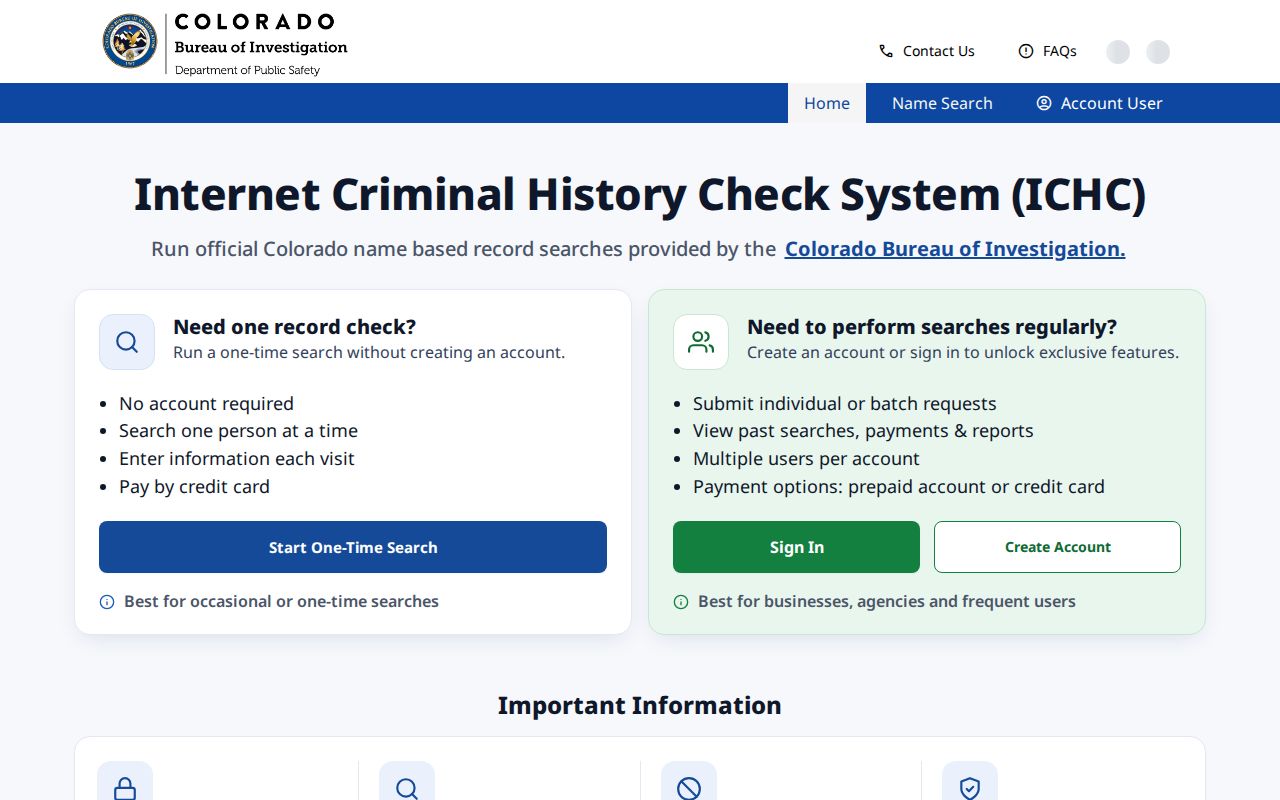
Run CBI history checks only for the statewide criminal-history question; use the court clerk route for the criminal case record.
Montrose Criminal Case Flow
A criminal case record grows as the matter moves through court. The DA dashboard separates felony referrals, charging and filing, case resolution, diversion or deferrals, and sentencing. That sequence matters because an arrest or law-enforcement referral is not the same as a filed court charge, and a filed charge is not the same as a conviction.
Case flow: Charges Filed › Arraignment › Pretrial and Motions › Plea or Trial › Disposition › Sentencing
| Stage | What Happens |
|---|---|
| Charging and Filing | The prosecutor files a complaint, information, or other charging document that starts the court case. |
| Arraignment | The defendant is advised of charges and may enter a plea or receive future dates. |
| Pretrial and Motions | The docket may show hearings, continuances, motions, orders, and case-management events. |
| Plea or Trial | The case moves toward a negotiated plea, trial setting, verdict, dismissal, or deferred outcome. |
| Disposition and Sentencing | The court records the result and any sentence, probation, fine, jail, or other order. |
The Governor appointment announcement for Montrose County Court is one of the assigned criminal court records images and reflects the local county court level within the 7th Judicial District.
County Court is important in criminal records because misdemeanors and felony complaints can begin there before a felony case moves to District Court.
Montrose Criminal Record Fields
Montrose County criminal court records may include searchable identifiers and requestable documents. The docket search breaks case number into year, case class, and sequence. The court request form allows criminal document requests for Complaint/Information, Disposition/Sentence Order, Protection Order, Ticket, and Register of Action. The Register of Action can include charges, sentences, and minute orders.
| Field | What It Shows |
|---|---|
| Case Number | Four-digit year, case class such as CR or M, and case sequence. |
| Defendant | Name of the accused party in the criminal court file. |
| Court Type | County Court, District Court, or municipal court if it is a city ordinance matter. |
| Charges | Alleged offenses as filed, amended, dismissed, or resolved in the case. |
| Plea | The defendant's response to a charge, such as guilty or not guilty when shown. |
| Docket Events | Hearings, motions, continuances, minute orders, and case activity. |
| Disposition | The final result of a charge or case, including dismissal, plea, verdict, or other outcome. |
| Sentence | Penalty or conditions imposed after conviction, such as jail, probation, fines, or orders. |
For custody or booking status, use the jail roster or inmate records. For active warrant questions, use court and agency contact channels rather than CBI, because the CBI FAQ states that the Internet Criminal History Check does not provide warrant information.
Charges vs. Convictions
A Montrose County criminal court record can show charges that never became convictions. The DA may file, amend, reduce, dismiss, or resolve charges through a plea, trial, diversion, deferral, or sentencing outcome. The difference is central when reading a court record, because a charge is an allegation and a conviction is a final criminal result after a plea or verdict.
| Charge | Conviction | |
|---|---|---|
| Stage | Accusation filed in court | Final result after plea or verdict |
| Record Location | Complaint, information, docket, or register of action | Disposition, sentence order, or register of action |
| Meaning | The case alleges an offense | The court records guilt or a qualifying conviction outcome |
| Possible Change | May be amended, reduced, or dismissed | May lead to sentence, probation, fines, or sealing eligibility review |
Read Dispositions and Sentences
A disposition is the final result of a charge or case. A sentence is the punishment or condition imposed after conviction. A Montrose County criminal court record may show dismissal, guilty plea, verdict, deferred result, diversion reference, probation, jail, fine, or other order depending on the case. The court request form lists Disposition/Sentence Order as a criminal matter document, so that request route is the correct path when an employer, licensing office, attorney, or agency needs the official court outcome.
The CBI Internet Criminal History Check FAQ is assigned to this page because it explains statewide criminal-history limits, including the warrant limitation.
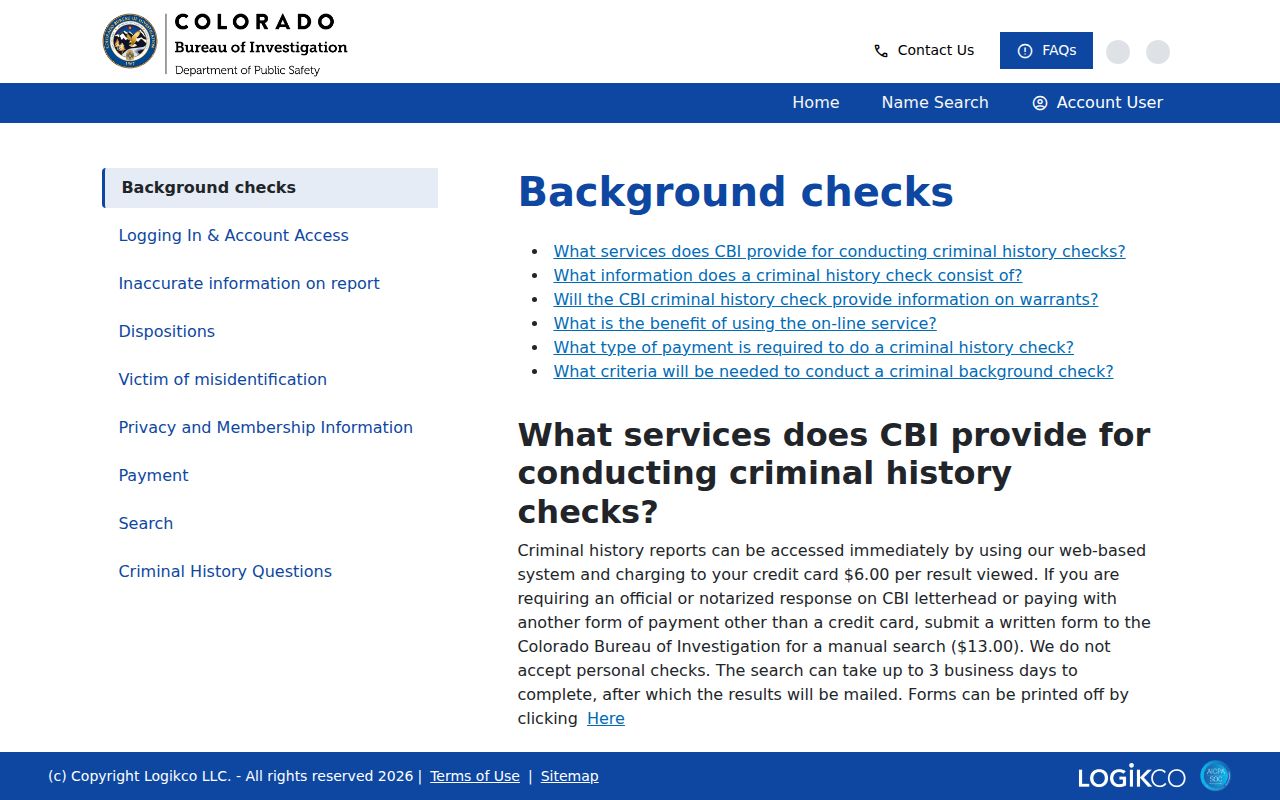
A CBI response can help with statewide history, but the court sentence order remains the direct source for a Montrose County criminal case outcome.
Sealed vs. Expunged Records
Colorado sealing and expungement are not the same. Sealing limits public access to eligible records after a court order. Expungement is used more often for juvenile or specific statutory records and can remove or destroy records under the rules that apply. The research points to C.R.S. 24-72-706 and related sealing statutes, while juvenile confidentiality is tied to Title 19 and court access limits.
| Sealed | Expunged | |
|---|---|---|
| Public View | Public access is restricted by court order. | Record may be removed or destroyed where the statute allows. |
| Common Use | Eligible adult criminal records after statutory waiting periods and exclusions. | Juvenile or specific statutory categories more often than ordinary adult cases. |
| Agency Access | Law enforcement and authorized agencies may still have access. | Access is narrower and depends on the expungement law. |
| Montrose Filing Route | Usually file in the court where the case exists. | Use the court and form category that applies to the record type. |
Access Montrose Criminal Records
Public access to Montrose County criminal court records is controlled by court rules, statutes, Chief Justice Directives, local administrative orders, and court orders. The court request form warns that suppressed cases, juvenile records, probate records, and documents with confidential or protected information may require U.S. government-issued photo ID or may be restricted. CJD 05-01 is the main Colorado Judicial Branch access policy for court records.
Key Statutes:
Chief Justice Directive 05-01 controls public access to Colorado court records while protecting restricted material.
Colorado sealing and expungement memorandum summarizes record sealing rules, waiting periods, exclusions, and related statutes.
The CBI fees and forms information screenshot assigned to Montrose County criminal court records supports the distinction between statewide CHRI processing and local court document requests.
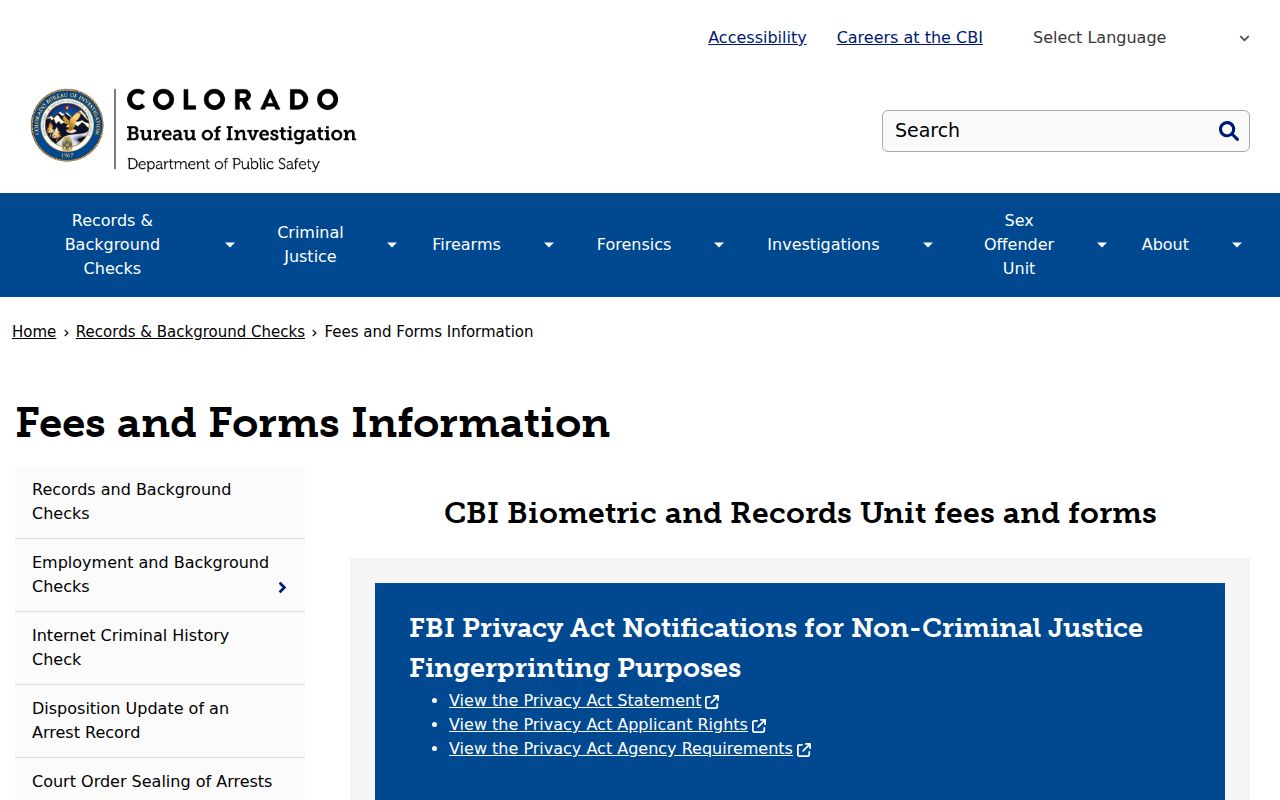
State records processing and court document processing can both matter, but they answer different questions about a criminal record.
CBI Checks Are Separate
The Colorado Bureau of Investigation maintains Colorado-only name-based criminal history checks. It is useful when the question is whether a Colorado CHRI result exists. It is not the court clerk, does not provide warrants, and does not replace a Montrose County criminal court record. The CBI FAQ states that warrant information is available only by contacting issuing agencies at their discretion.
Important: Court records, jail records, and CBI history checks should be matched before drawing conclusions from one source.
Restricted Montrose Criminal Records
Juvenile records, sealed cases, suppressed files, mental-health material, protected addresses, financial account data, and personal identifiers can be withheld or redacted. Certain juvenile arrests are excluded from public CBI name-based results in the circumstances noted by CBI. Court access can also be limited by statute, Supreme Court rule, Chief Justice Directive, local administrative order, or judge's order.
Montrose County criminal defense access can involve the Colorado State Public Defender Montrose office. Adults seeking a state-paid professional use JDF 208, and juveniles use JDF 219. The Public Defender reviews the paperwork and informs the court whether the person qualifies, while the court makes the final decision.